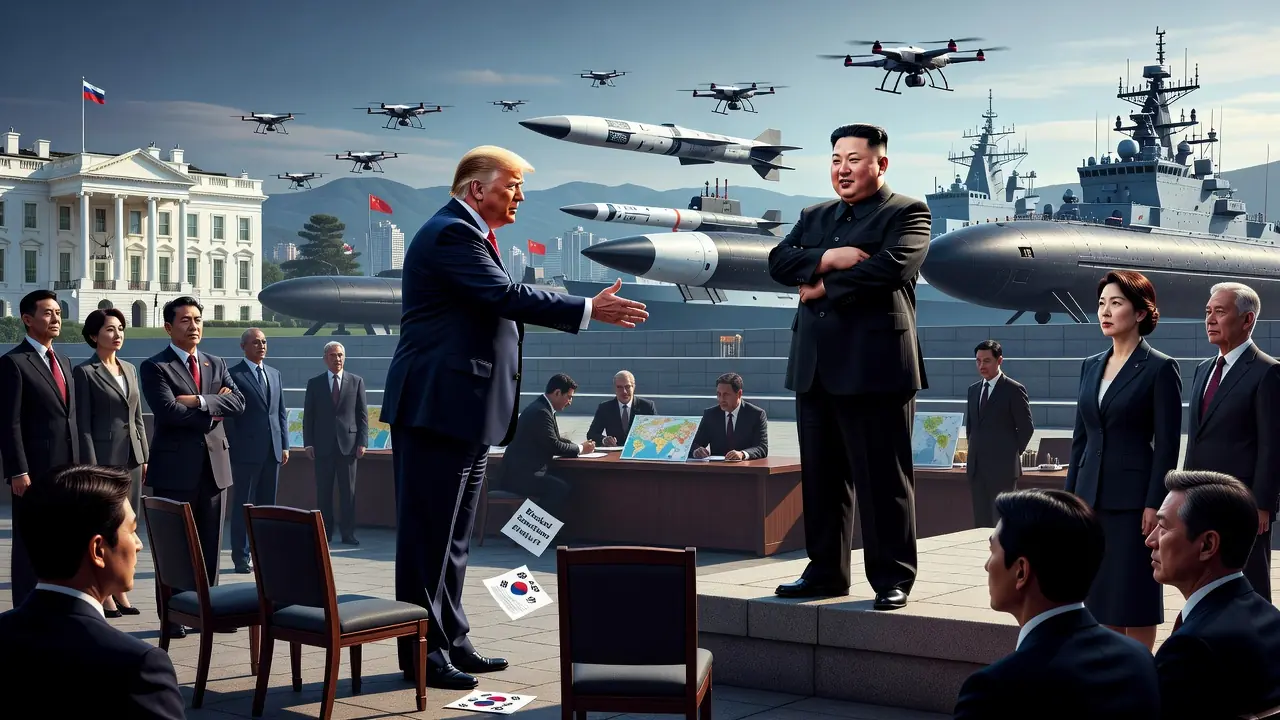
Donald Trump's setback in the midterm elections has left analysts weighing whether a politically weakened president will pursue renewed diplomacy with North Korea as a way to claim a foreign policy win. Yet North Korean leader Kim Jong Un, backed by an expanded arsenal and closer ties to Russia and China, appears to have little incentive to return to the table.
Domestic Setback, Foreign Policy Opportunity
Democrats' takeover of Congress has narrowed Trump's room to maneuver at home, prompting speculation that he will lean more heavily on foreign policy to shape his legacy in his final two years in office. Analysts such as Ban Kil-joo, a professor at the Korea National Diplomatic Academy, suggest Trump could devote greater attention to Asia, where he previously built a personal rapport with Kim through three in-person meetings during his first term. The White House has rejected any suggestion that foreign policy moves are driven by domestic political calculation, saying decisions reflect US security interests.
Why Pyongyang Feels Less Pressure to Engage
Unlike the 2018-2019 period that produced the Trump-Kim summits, North Korea has since significantly expanded its missile and nuclear capabilities, adding hypersonic glide vehicles, modern warships, submarines and drone technology. Its deepening relationships with Moscow and Beijing have further reduced the economic and diplomatic pressure it once faced. Kim Yo Jong, the North Korean leader's influential sister, has said dialogue could be a path to peace but insisted there is no current need to negotiate, while criticizing what Pyongyang calls a hostile US policy. Pyongyang's silence ahead of a recent regional summit in China has further dimmed hopes of an imminent meeting.
Allies Wary of Being Sidelined
South Korea and Japan are watching closely, concerned that Washington could strike a deal limiting rather than eliminating North Korea's nuclear program, without full consultation. Leif-Eric Easley of Ewha Womans University warned that sidelining denuclearization could weaken regional deterrence and strain coordination among Washington, Seoul and Tokyo. A senior Japanese official has voiced concern about exclusion from any direct Trump-Kim arrangement, particularly if Beijing and Moscow tacitly back it.
A Lame-Duck Problem
Even if Trump seeks engagement, a Democratic-controlled Congress could block concessions on sanctions or security commitments, raising doubts in Pyongyang about whether any deal would survive a future administration. Moon Chung-in of Yonsei University noted that North Korea will weigh whether Trump retains enough political authority to deliver congressional backing. Stephen Biegun, a former US negotiator with Pyongyang, has similarly argued that North Korea currently sees limited value in another summit. Analysts caution that without substantive compromises from Washington and a clearer strategic incentive for Kim, a renewed meeting could amount to little more than symbolism.